




Which mooring rope should you choose? Polyolefin, polyester or HMPE

A mooring line may seem like a simple product, but the choice makes a big difference: for the safety of the crew, for the strain on bollards and winches, and for long-term costs. In this article, we compare the main materials and show you what to look out for. The information comes from the practical experience of our rope shop in Harlingen and our rope brand BR Ropes.
Stretch: shock absorption or control
The biggest difference between mooring lines is stretch. A line with a lot of stretch absorbs shocks from swell, wind, and passing ships. This relieves strain on bollards, winches, and the ship itself. A line with little stretch keeps the ship firmly in place and provides more control when mooring.
- Polyolefin and PP/PE: around 14 to 16% stretch at break. Soft, shock-absorbing, and forgiving.
- Polyester/polyolefin (blend): also around 16% stretch, but stronger per diameter.
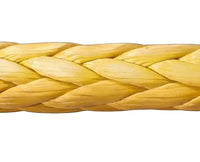
- HMPE (Dyneema®): maximum around 4% stretch, 2 to 3% in some constructions. Very strong and light, but with little shock absorption.
Floating or not
Polyolefin and PP/PE have a specific gravity below that of water (around 0.92 to 0.93). They float. A floating line stays away from the propeller and is easy to retrieve. Moreover, the rope does not absorb water: it stays light and does not become stiff when wet or frozen. For ships that moor daily, this is a major advantage.
Weight and handling
HMPE is by far the lightest material per ton of breaking strength. That is why larger ships and offshore operations often choose HMPE: the same strength as steel wire, but at a fraction of the weight. Polyolefin and PP/PE are lighter than polyester and nylon of the same diameter. On smaller ships, light, floating lines save time and prevent back problems and injuries.
Winch drum or bollard
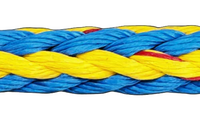
- On a winch drum, a round, stable braid works best, such as a 12-strand construction.
- On bollards and for manual work, a softer, more supple rope is easier to tie.
- Lines that hold a ship together must be of the same type and the same length. Otherwise, the stiffest line takes almost all the load.
HMPE with an elastic tail
Do you want to combine the lightness of HMPE with shock absorption? Then attach a short tail of more elastic rope to the end of the HMPE line. The tail absorbs the peaks, while the HMPE line keeps the weight low. We splice such a combination to size in our workshop.
Cost per year, not per meter
Polyolefin and PP/PE are the most affordable to purchase. HMPE is more expensive, but lasts a long time and can be re-spliced if damaged. Therefore, do not calculate based on the price per meter alone, but also on the lifespan. HMPE often works out more favorably per year than you expect.
Overview
| Material | Stretch at break | Floating | Suitable for |
|---|---|---|---|
| Polyolefin (e.g. BR-Float) | 16% ±2% | Yes | Daily mooring, inland shipping, workboats |
| Polyester/polyolefin (e.g. BR-Plus) | ca. 16% | Yes | Stronger mooring lines at a sharp price |
| PP/PE (e.g. Orkava, Tipto) | ca. 14% | Yes | General mooring, large diameters |
| HMPE (e.g. BR-HMPE, Acera) | 2 to 4% | Yes, but little stretch | Marine, offshore, winches, replacement of steel wire |
From our range
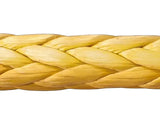
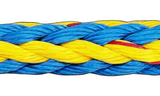
- BR-Float 12-strand: floating polyolefin mooring line, yellow/blue.
- BR-Plus 12-strand: polyester/polyolefin, strong and affordable.
- BR-HMPE and BR-Steel/Grey: HMPE with the strength of steel wire.
- Acera Amundsen: HMPE with less recoil at break.
- You can find all lines under braided rope and laid rope.
For every type of rope, you will find the rope specifications on the product page and, where available, the technical data sheet.
Help with the choice
Unsure about the material or diameter? Give us the type of ship, the displacement, and the winch or bollard specifications, and we will calculate it for you. We cut every line to size and splice an eye, loop, or thimble into it in our workshop. Contact us or request a quote.
Cut to length per metre, with an eye, splice or thimble from our workshop in Harlingen. View our rope Line finder
More tips


